

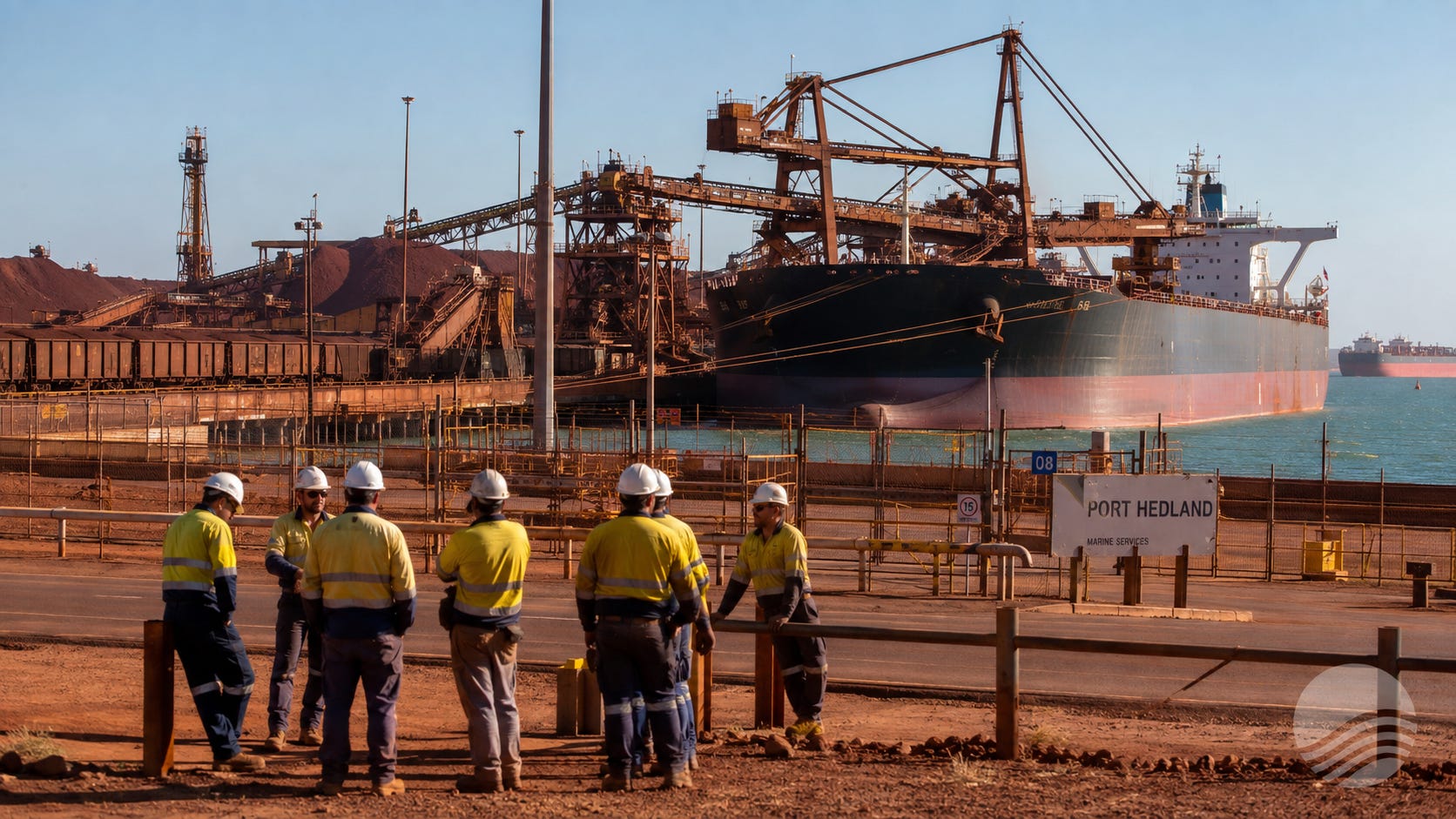
Workers at BHP’s Port Hedland operations in Western Australia carried out a two-day strike on August 8-9 — a 24-hour ship-loading ban followed by a full 24-hour stoppage — marking the first major industrial action at the terminal in more than two decades. Around 150 workers, represented by the Combined BHP Ports Unions, took part. The action was expected to hold up 16 iron ore shipments, out of daily exports worth roughly $80 million.
A dispute seven months in the making
The strike caps more than seven months of negotiations between BHP and the CBPU, which represents about 450 operators and maintenance staff, over a new four-year enterprise agreement. A partial action in July involving around 63 workers failed to disrupt shipments meaningfully; August’s larger, two-phase action — a loading ban followed by a full stoppage — was designed to build vessel queues without giving BHP the same operational buffer. The strike proceeded despite what unions described as progress in an August 5 negotiating session, and rival miners Fortescue and Hancock Prospecting, which also use the port, were not affected.
Why it matters for the market
Port Hedland handled 571.6 million tonnes of iron ore in the year to June — 75% of all Pilbara exports — making it the single most concentrated node in the global iron ore supply chain. Analysts have downplayed the immediate market impact, noting BHP can likely make up lost volume over the year, and the strike arrives as iron ore prices already sit near a one-year low on softer Chinese steel demand. The real date to watch is August 18, when BHP’s annual earnings release doubles as the next scheduled round of pay talks — a rare instance of a labor dispute and a corporate results calendar colliding directly.