

The move follows a spike in Russian and Ukrainian drone strikes on merchant vessels in the Black Sea, including at least two Turkish-owned ships hit in the past two weeks — one, the MV Gulluk, reportedly struck in its living quarters near Novorossiysk without crew injuries. Turkey’s Foreign Ministry has called for “concrete measures” from both warring parties to protect navigation, warning that further escalation would carry “multifaceted negative consequences.” The Caspian Pipeline Consortium terminal at Novorossiysk has separately had to suspend and restart loadings multiple times this year because of strikes in the area.
Why it matters for the market
Novorossiysk handles a large share of Russian crude and grain exports, and the Bosphorus-Dardanelles corridor carried more than 40,000 vessel transits in 2025, making it one of the busiest waterways on earth. An unofficial, case-by-case permitting slowdown is a lighter-touch measure than a formal closure, but it still adds queuing time and uncertainty for any operator moving cargo in or out of the Black Sea — layering a second live chokepoint risk onto a year already dominated by the Hormuz standoff. With no official Turkish confirmation or timeline, owners routing through the strait have little to go on beyond ship-tracking data for now.
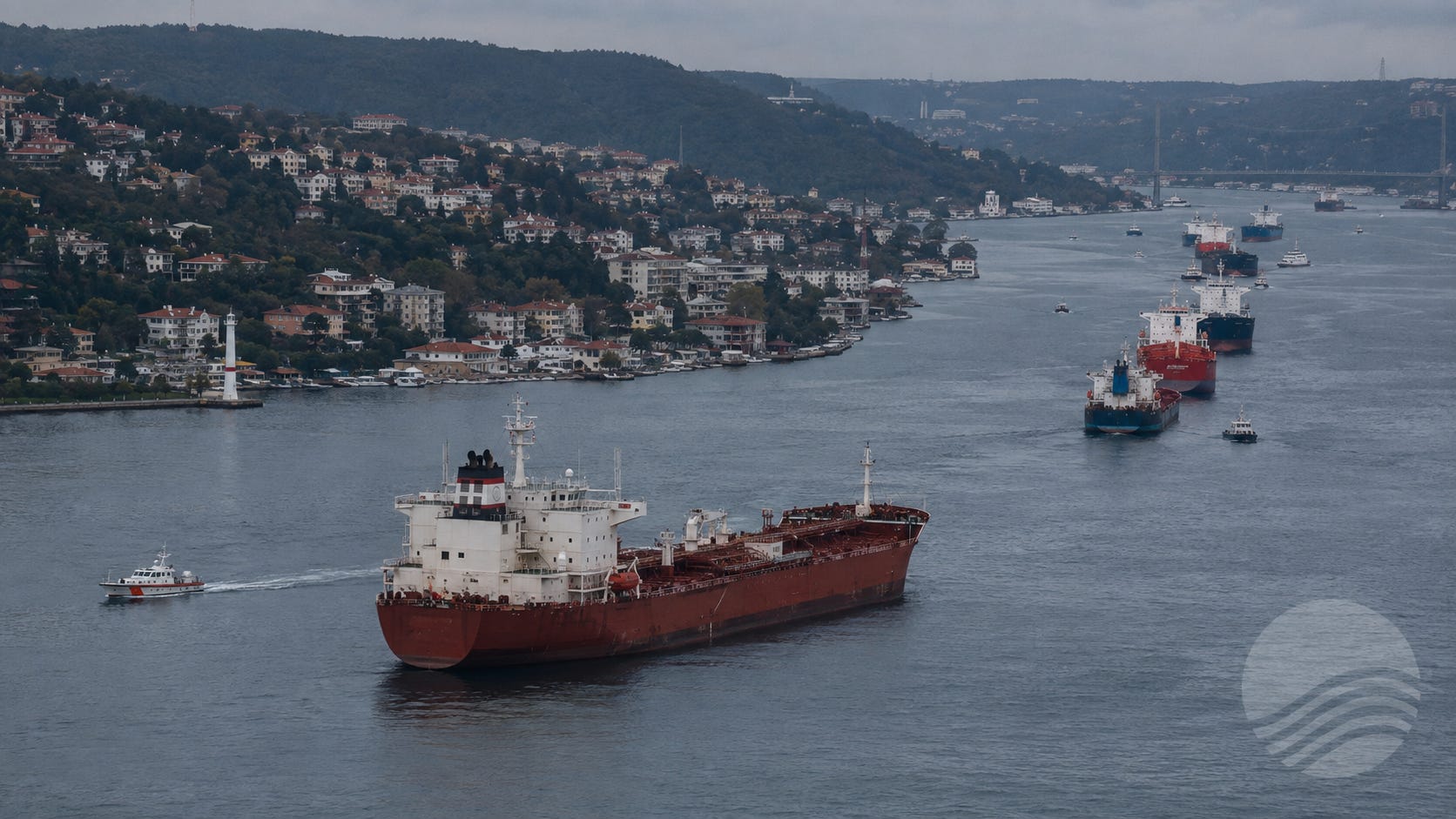
Turkey has begun restricting commercial ship traffic into the Black Sea, with its Directorate General of Coastal Safety telling multiple vessels bound for Russia’s Novorossiysk — a key oil and grain export hub — that transit permits through the Dardanelles are not currently being issued, or require extended review. Some ships headed to Ukrainian ports, including Odesa, have reportedly faced the same restriction. Authorities have offered no official explanation, and vessels bound for Turkish or Bulgarian ports continued moving normally as of Saturday afternoon.
A response to a wave of attacks
The move follows a spike in Russian and Ukrainian drone strikes on merchant vessels in the Black Sea, including at least two Turkish-owned ships hit in the past two weeks — one, the MV Gulluk, reportedly struck in its living quarters near Novorossiysk without crew injuries. Turkey’s Foreign Ministry has called for “concrete measures” from both warring parties to protect navigation, warning that further escalation would carry “multifaceted negative consequences.” The Caspian Pipeline Consortium terminal at Novorossiysk has separately had to suspend and restart loadings multiple times this year because of strikes in the area.
Why it matters for the market
Novorossiysk handles a large share of Russian crude and grain exports, and the Bosphorus-Dardanelles corridor carried more than 40,000 vessel transits in 2025, making it one of the busiest waterways on earth. An unofficial, case-by-case permitting slowdown is a lighter-touch measure than a formal closure, but it still adds queuing time and uncertainty for any operator moving cargo in or out of the Black Sea — layering a second live chokepoint risk onto a year already dominated by the Hormuz standoff. With no official Turkish confirmation or timeline, owners routing through the strait have little to go on beyond ship-tracking data for now.