

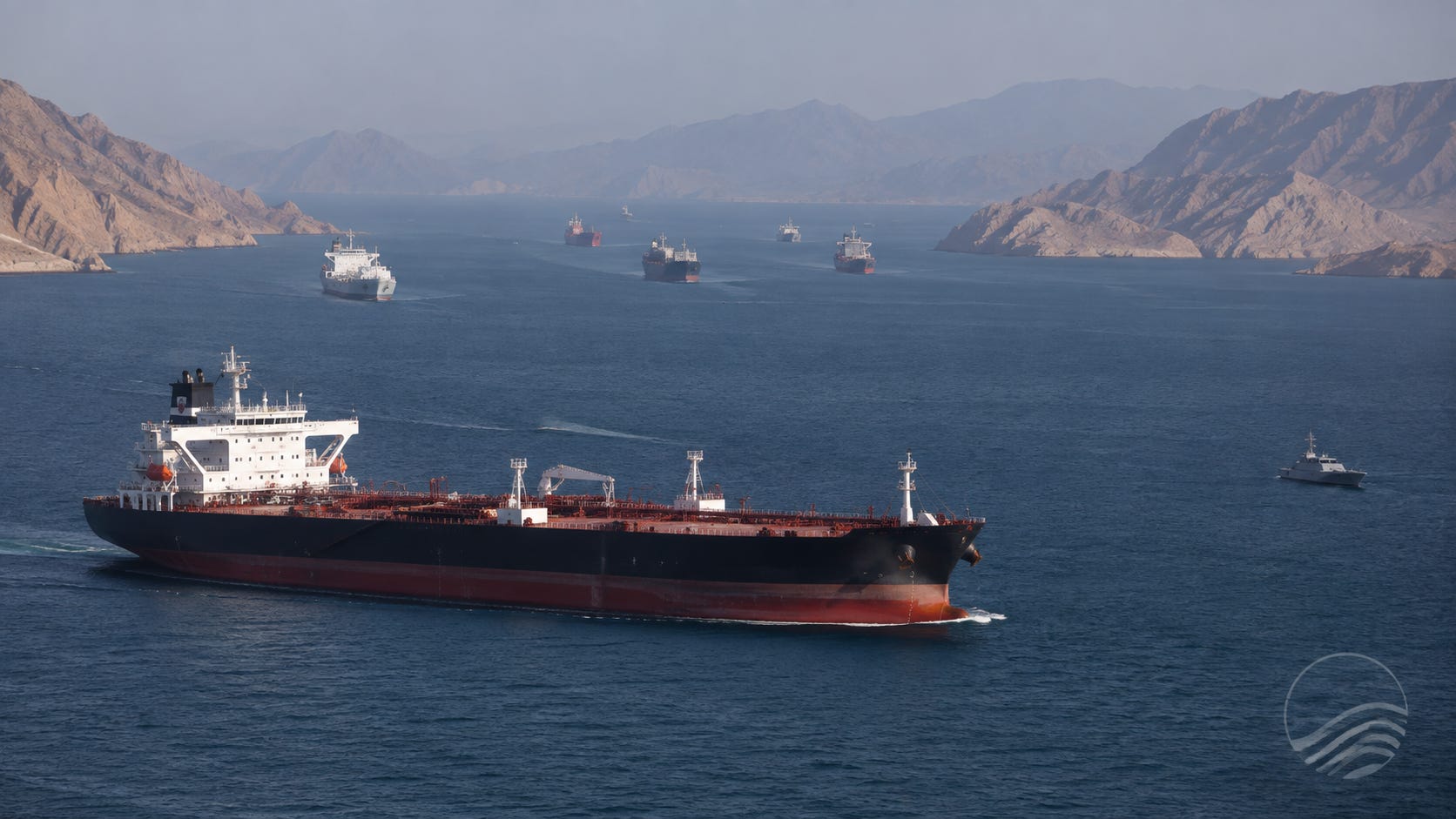
Eight of the world’s largest shipping associations sent a joint letter to UN Secretary-General António Guterres and IMO Secretary-General Arsenio Dominguez on August 3, published August 5, opposing any compulsory tolls or transit charges in the Strait of Hormuz. Signatories included BIMCO, the International Chamber of Shipping, INTERTANKO, INTERCARGO, the World Shipping Council, the Asian Shipowners’ Association, European Shipowners and the Cruise Lines International Association.
The letter argues that introducing mandatory charges, or “service fees that are a toll in all but name,” would mark a sharp break from established international practice and could unravel the legal framework — anchored in the UN Convention on the Law of the Sea — that governs transit passage through international straits generally, not just Hormuz.
Timing tied to an emerging Iran-Oman deal
The intervention comes as Iran and Oman reportedly near a final understanding on managing traffic through the strait, under which inbound vessels would use an Iranian-controlled route and outbound traffic would exit through an Oman-managed lane, with security and environmental fees attached. Oman has told the IMO it opposes mandatory charges but is open to voluntary contributions toward navigation-support services. Dominguez himself has previously stated that no mechanism in international law permits countries to charge for passage through an international strait, and the IMO rejected an earlier US proposal for a 20% cargo levy on the same grounds.
Why it matters for the market
The associations frame the risk in blunt economic terms: once a precedent for tolls is set at one chokepoint, it becomes harder to resist similar charges elsewhere — from the Bab-el-Mandeb to the Strait of Malacca — pushing up freight costs, energy prices and inflation across global supply chains. With roughly a fifth of the world’s oil and gas moving through Hormuz, even a modest per-transit fee would ripple through tanker economics and, ultimately, Asian import costs, where energy demand is most exposed to the corridor. Whether the Iran-Oman-US framework ends up excluding tolls, as an interim 60-day arrangement reportedly does, will be the detail worth watching as the deal’s finer terms are finalized.