

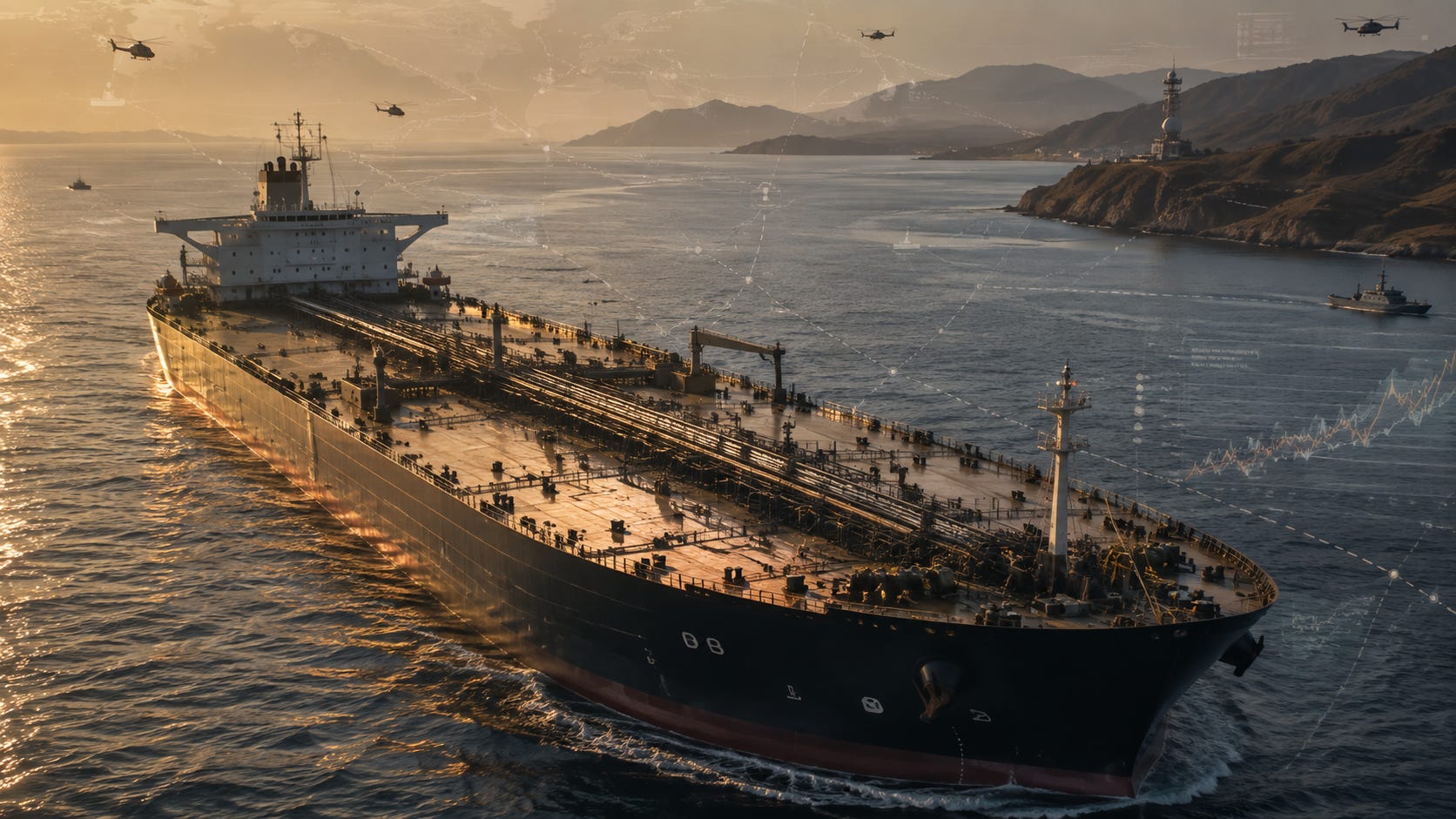
The world’s largest shipping associations have told the United Nations, in unusually blunt terms, that a toll on the Strait of Hormuz is a red line the industry will not accept quietly.
Eight organizations — including BIMCO, the International Chamber of Shipping, INTERTANKO, INTERCARGO, the Asian Shipowners’ Association, Cruise Lines International Association, European Shipowners and the World Shipping Council — sent a joint letter dated August 3 to UN Secretary-General António Guterres and IMO Secretary-General Arsenio Dominguez.
The letter urged the UN and IMO to oppose any compulsory tolls or transit charges in the Strait of Hormuz, warning the move could set a precedent for similar fees at other maritime chokepoints. The signatories argued that such fees would undermine the legal framework governing international straits and drive up energy prices worldwide.
The letter’s language is unusually direct for an industry that typically avoids public confrontation with a state actor: it states that seafarer safety “should be non-negotiable,” adding “so too must be freedom of navigation.” That framing reflects the human cost already logged since the conflict began — the IMO has confirmed 64 incidents and 17 deaths in the region since the war started.
How Iran built leverage over the strait
The crisis dates to February 28, 2026, when the US and Israel launched an air war against Iran and assassinated Supreme Leader Ali Khamenei, prompting Iranian missile and drone retaliation against Israel, US bases and Gulf states.
In the months since, Tehran has used its de facto control over Hormuz — through which roughly a fifth of global oil and gas supply passes — as a negotiating lever. Reporting from the period when the toll regime was active put charges at roughly $1 million to $2 million per vessel per voyage, scaled to a ship’s size, cargo type and volume, with fully laden crude tankers at the top of that range.
A brief ceasefire brokered by Pakistan in June suspended the toll, but it did not hold. Iran re-declared the strait closed within days.
What international law actually says
Legally, the industry has an ally on paper. The IMO Council said in July that passage through the strait should remain free of tolls under international law and that any regional arrangement must guarantee non-discriminatory, unimpeded transit for all ships.
Dominguez himself said in July that international law contains no mechanism allowing countries to charge ships for crossing the strait, and the IMO had already rejected a proposed 20% US levy on cargo transiting Hormuz as a violation of UNCLOS.
But legal clarity has not translated into enforcement leverage. As one Singapore-based security analyst put it to Al Jazeera, international organizations and shipowners lack the leverage to affect Iran’s calculus, however strong their formal interest in freedom of navigation.
Iran, for its part, has signaled it isn’t backing down on the principle of some new arrangement, even as talks with Oman progress. A senior Iranian official described the emerging framework as a break from six decades of prior practice, while insisting it does not mean the strait is fully reopening on the old terms.
The bigger risk: precedent, not just cost
The industry’s core fear isn’t just the cost of Hormuz tolls — it’s precedent. If a chokepoint toll becomes normalized here, shipowners worry other states could point to it to justify fees at the Bosphorus, Malacca, or Bab-el-Mandeb.
For an industry already absorbing war-risk premiums, rerouted voyages, and rising insurance costs from a two-front disruption spanning Hormuz and the Black Sea, a durable toll regime would represent a structural, not episodic, cost shock.
The real test now is whether the Iran-Oman framework, described as “nearing completion,” incorporates any fee mechanism the industry could tacitly accept as a security surcharge rather than a sovereign toll — and how Washington responds if flagged vessels pay it regardless.