

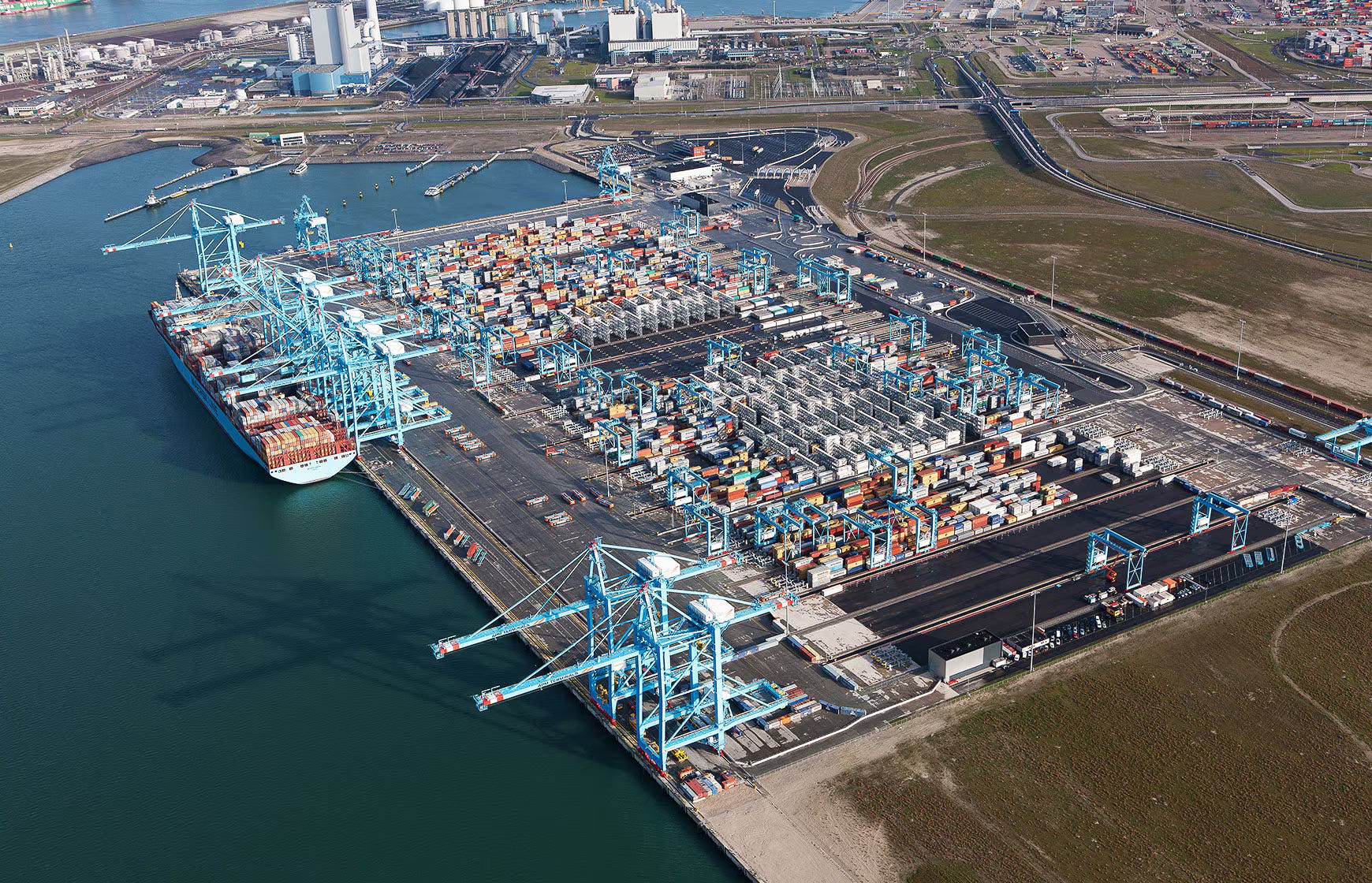
Hapag-Lloyd has taken a significant stake in APM Terminals’ Maasvlakte II facility in Rotterdam, one of Europe’s most important container hubs and an asset previously controlled solely by Maersk’s terminal arm. The move deepens the operational architecture underpinning the Gemini Cooperation, the alliance the two carriers formed to coordinate their networks.
From alliance to ownership
Shipping alliances have traditionally been built on vessel-sharing and slot arrangements rather than shared ownership of physical infrastructure. Hapag-Lloyd’s move into Maasvlakte II signals something more structural: a bet that controlling — not just accessing — key terminal capacity is now central to keeping alliance economics stable.
Rotterdam remains Europe’s largest port by throughput and a critical node for transatlantic and Asia–Europe strings. Securing a direct stake in the terminal handling much of that volume reduces Hapag-Lloyd’s exposure to congestion risk and gives it more say over berth allocation and investment priorities at the facility — leverage it previously had to negotiate for as a tenant.
Part of a broader pattern
The transaction fits a wider trend across container shipping: carriers increasingly treating terminal ownership as a hedge against freight-rate volatility, rather than leaving that layer of the value chain entirely to dedicated port operators. Mediterranean Shipping Company, CMA CGM, and COSCO have all pursued similar vertical integration strategies in recent years, and Hapag-Lloyd’s move suggests the logic is now consolidating within Gemini specifically, rather than remaining a purely competitive dynamic between rival alliances.
What to watch is whether this stake is a template Hapag-Lloyd and Maersk extend to other Gemini hub ports, which would mark a meaningful shift in how the alliance manages capacity risk beyond simple vessel-sharing agreements.