

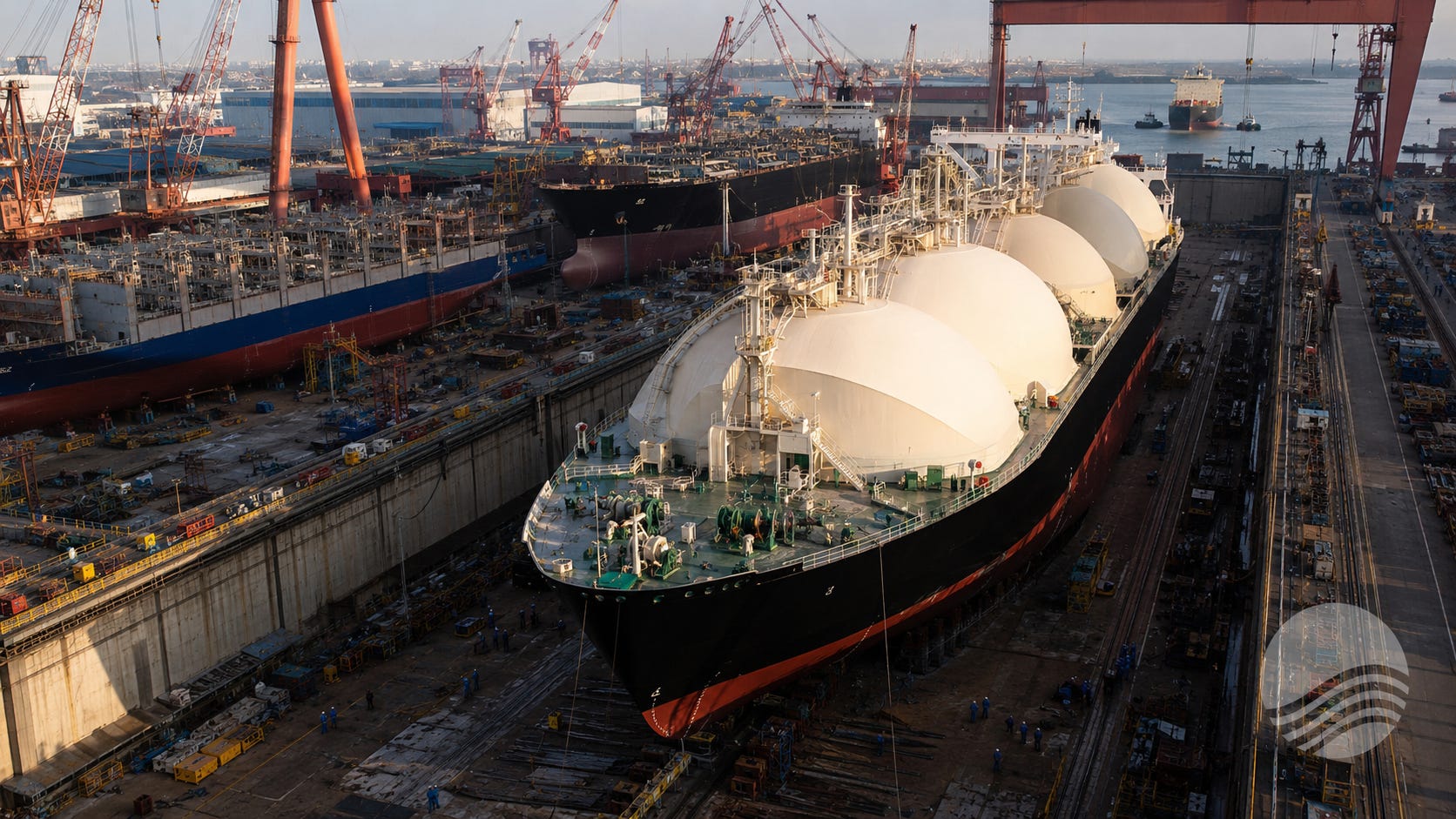
Chinese shipyards secured 72% of global merchant newbuilding orders by compensated gross tonnage in the first half of 2026, according to Clarksons Research, extending a lead they have held for four consecutive years. South Korea took 19% of the market. Global orders rose 66% year-on-year to nearly 43 million CGT across 1,481 vessels, with Chinese yards alone booking 1,131 of those ships — more than double their order volume from a year earlier.
Broad-based demand, not a single sector
The order flow spanned gas carriers, tankers, bulkers and boxships, according to the latest weekly tally, indicating owners are committing capital across vessel types rather than chasing one hot segment. South Korea’s smaller but still-growing share was helped by LNG carrier demand, where Korean yards retain a technical edge, and by newer, alternative-fuel-capable containership orders that Chinese yards have historically ceded. The global orderbook stood at 206.6 million CGT at the end of June — 17% of the world fleet, near a 17-year high — with newbuilding prices holding roughly steady after a multi-year climb.
Why it matters for the market
Owners are still placing orders despite freight-rate volatility and elevated chokepoint risk from Hormuz and now the Black Sea, a sign that fleet-renewal and decarbonization pressure remain stronger drivers than short-term geopolitical noise. China’s growing share, however, keeps trade-policy tension in the background: Washington’s port-fee scrutiny of Chinese-built tonnage last year briefly shifted order flow toward Korea before reversing, and further US measures targeting Chinese shipbuilding capacity remain a live variable for owners planning multi-year newbuild programs.